$99 Limited Emergencies Exam*
*For uninsured New Patients only
Are You Brushing Correctly? Common Oral Hygiene Mistakes Charlottesville Patients Make

Most people brush their teeth every day without giving it much thought. It’s part of the morning routine, something we’ve been doing since childhood.
But here’s the surprising reality:
👉 Many adults are brushing incorrectly without realizing it.
At Rugby Dental Arts, Dr. Naveen Chennupati often sees patients from Charlottesville, Crozet, Pantops, and Belmont who are diligent about brushing but still experience:
- Cavities
- Gum inflammation
- Plaque buildup
- Tooth sensitivity
The problem usually isn’t whether they brush—it’s how they brush.
Good oral hygiene is about more than simply using a toothbrush twice a day. Technique, consistency, timing, and overall habits all play a major role in maintaining healthy teeth and gums.
Let’s explore some of the most common oral hygiene mistakes patients make—and how small changes can make a big difference.
Why Proper Brushing Technique Matters
Brushing helps remove:
- Plaque
- Food debris
- Harmful bacteria
When plaque isn’t removed effectively, it can harden into tartar and lead to:
- Cavities
- Gum disease
- Bad breath
- Tooth decay
Even patients with otherwise healthy habits can develop dental problems if their brushing technique isn’t effective.
Common Oral Hygiene Mistakes Charlottesville Patients Make
Many brushing mistakes are extremely common—and easy to correct once you know what to look for.
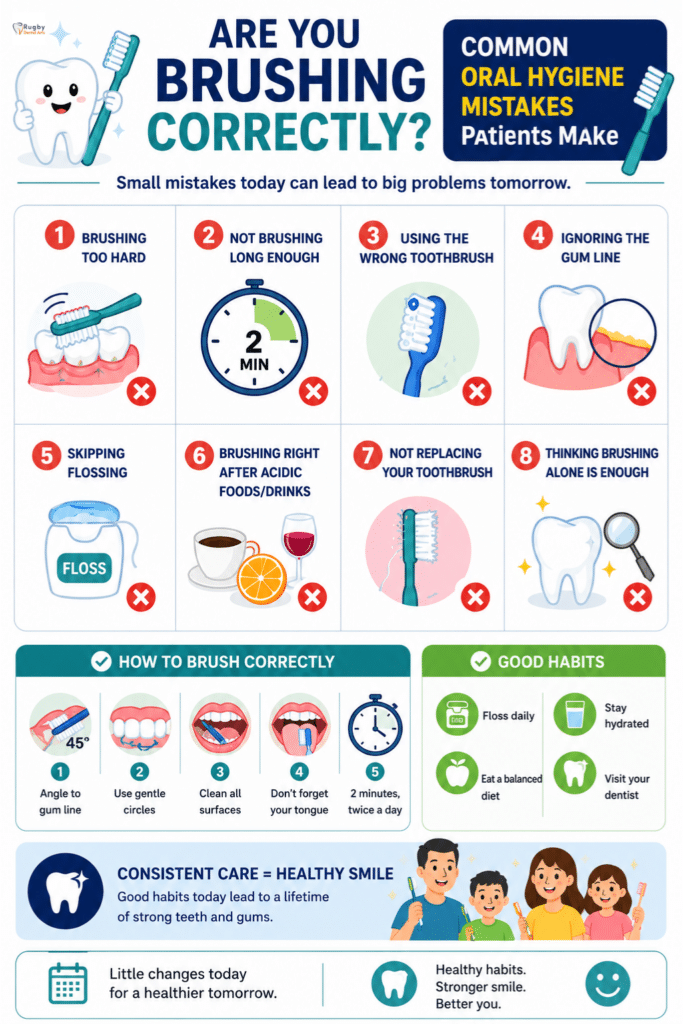
1. Brushing Too Hard
One of the biggest misconceptions is that harder brushing means cleaner teeth.
In reality, aggressive brushing can:
- Wear down enamel
- Irritate gums
- Cause gum recession
- Increase sensitivity
Your toothbrush should glide gently across your teeth—not scrub them aggressively.
Better approach:
Use soft, circular motions with a soft-bristled toothbrush.
2. Not Brushing Long Enough
Many people brush for less than a minute without realizing it.
Dentists generally recommend:
- Brushing for two full minutes
- Twice daily
That gives enough time to clean all tooth surfaces properly.
Patients rushing through busy mornings in Charlottesville or heading to work near the Downtown Mall often underestimate how quickly they finish brushing.
3. Using the Wrong Toothbrush
Not all toothbrushes are ideal for every patient.
Hard-bristled brushes can damage enamel and irritate gums, especially when combined with excessive pressure.
Most dentists recommend:
✔ Soft-bristled toothbrushes
✔ Smaller brush heads for better reach
Electric toothbrushes may also help improve consistency and technique.
4. Ignoring the Gumline
Plaque and bacteria often accumulate near the gumline.
If this area isn’t cleaned properly, it can contribute to:
- Gingivitis
- Gum disease
- Bleeding gums
Many patients focus only on the visible surface of teeth and miss this critical area.
5. Skipping Flossing
Brushing alone only cleans about 60% of tooth surfaces.
That means plaque and food debris can remain trapped between teeth where toothbrush bristles can’t reach.
Skipping flossing increases the risk of:
- Cavities between teeth
- Gum inflammation
- Bad breath
Patients throughout Ivy, Keswick, and Pantops commonly admit that flossing is the first habit they neglect when life gets busy.
6. Brushing Immediately After Acidic Foods or Drinks
This is a mistake many people don’t realize they’re making.
After consuming:
- Coffee
- Citrus
- Soda
- Wine
Your enamel temporarily softens.
Brushing immediately afterward can actually wear enamel down more quickly.
Better approach:
Wait about 30 minutes before brushing.
7. Not Replacing Your Toothbrush Often Enough
Old toothbrushes become less effective over time.
Frayed bristles:
- Don’t clean properly
- Can harbor bacteria
General recommendation:
Replace your toothbrush every 3–4 months—or sooner if bristles are worn.
8. Assuming Brushing Alone Is Enough
Even excellent brushing habits don’t replace professional dental care.
Routine cleanings help remove:
- Hardened tartar
- Deep plaque buildup
- Surface stains
Regular dental visits also help identify issues before they become serious.
This is why many patients seeing a Charlottesville dentist for preventive care benefit from combining strong home habits with professional cleanings.
Signs Your Oral Hygiene Routine May Need Improvement
Your mouth often gives clues when your routine isn’t as effective as it should be.
Common warning signs include:
- Bleeding gums
- Persistent bad breath
- Tooth sensitivity
- Frequent cavities
- Plaque buildup
If you notice any of these symptoms, it may be time to adjust your oral hygiene habits.
Tips for Better Brushing Habits
Small improvements can have a major impact over time.
Helpful oral hygiene tips:
✔ Brush twice daily
✔ Use fluoride toothpaste
✔ Floss once daily
✔ Brush gently
✔ Clean your tongue
✔ Stay hydrated
Consistency matters more than perfection.
Why Preventive Care Matters
Preventive dentistry is always easier—and less expensive—than treating advanced problems later.
Routine dental visits help:
- Catch cavities early
- Monitor gum health
- Prevent more complex procedures
At Rugby Dental Arts, Dr. Naveen Chennupati emphasizes prevention because small issues are much easier to manage before they become painful or costly.
Oral Health Habits in Charlottesville
Charlottesville’s active lifestyle often means patients are balancing:
- Busy work schedules
- Family responsibilities
- Social activities
Whether commuting from Crozet, working near UVA, or spending weekends around Belmont and Pantops, oral health routines can easily become rushed.
But even a few extra minutes of proper care each day can make a significant difference in long-term dental health.
Why Patients Choose Rugby Dental Arts
Patients across Charlottesville and surrounding communities trust Rugby Dental Arts for:
- Personalized dental care
- Preventive-focused treatment
- Comfortable patient experiences
- Modern dental technology
Dr. Naveen Chennupati works closely with patients to create healthier habits that support long-term oral wellness.
Final Thoughts
Brushing your teeth may seem simple, but technique matters more than many people realise.
From brushing too hard to skipping flossing, small mistakes can quietly affect your oral health over time.
The good news?
Most oral hygiene issues are preventable with the right habits, proper technique, and routine professional care. Contact us if the problem persists.
For patients throughout Charlottesville, Crozet, Ivy, and nearby communities, improving daily oral hygiene can lead to healthier teeth, healthier gums, and fewer dental problems in the future.
FAQs
1. How long should I brush my teeth?
Dentists generally recommend brushing for two minutes twice daily.
2. Can brushing too hard damage teeth?
Yes. Aggressive brushing can wear enamel down and irritate gums.
3. Why do my gums bleed when brushing?
Bleeding gums may be a sign of gingivitis or improper brushing and flossing habits.
4. Is flossing really necessary?
Yes. Flossing removes plaque and debris between teeth where brushes can’t reach.
5. Where can I improve my oral hygiene routine in Charlottesville?
Rugby Dental Arts provides preventive dental care and oral hygiene guidance for patients throughout Charlottesville and nearby areas.